
Getting consistent traffic and high-quality leads is a common struggle. Pay-per-click (PPC) advertising offers a fast, scalable solution to get your brand directly in front of the right people at the exact moment they are looking for your services.
Understanding how to leverage paid advertising can completely change your growth trajectory. This guide breaks down exactly what PPC is, how the bidding systems operate, the platforms you should consider, and how to build a successful campaign from scratch.
What Is PPC (Pay-Per-Click)?
Pay-per-click, or PPC, is a digital advertising model where advertisers pay a fee each time one of their ads is clicked. Instead of paying a flat rate to display an ad, you only pay when a user actively engages with it by clicking through to your website.
Basically, you are buying visits to your site rather than trying to earn those visits organically.
For example, if you search for “commercial cleaning company” on Google, the first few results at the very top of the page usually have a small “Sponsored” or “Ad” tag next to them. These are PPC ads. The cleaning companies only pay the search engine if you actually click on their specific link.
How PPC Advertising Works
The mechanics behind PPC happen in a fraction of a second. Every time there is an ad spot available on a search engine or website, an automated auction takes place.
Advertisers bid on specific keywords relevant to their business. When a user searches for that keyword, the algorithm determines which ads to display based on the bid amount and the quality of the ad.
You control the targeting. You can choose to show your ads based on specific search terms, geographic locations, device types, and even the time of day. Your ads can appear on search engine results pages, across various websites as banner ads, or natively within social media feeds. Because of the cost structure, your advertising budget is only spent when a user takes action and clicks your link.
Common PPC Platforms
Different platforms serve different advertising goals. Here are the most common places to run PPC campaigns.
Google Ads
As the largest and most popular PPC network, Google Ads allows businesses to place ads on Google’s search engine and other Google properties. It’s highly effective for capturing users with high purchase intent.
Meta Ads (Facebook and Instagram)
With Meta Ads, you can target users based on their demographics and interests rather than their search queries. This makes it an excellent platform for building brand awareness and promoting products with strong visual appeal.
Other Advertising Platforms
Microsoft Advertising (formerly Bing Ads) operates similarly to Google and often has lower competition. YouTube Ads, which are managed through the Google Ads platform, allow you to run video campaigns. LinkedIn Ads are highly effective for B2B companies looking to target professionals by job title or industry.
Key Components of a PPC Campaign
A successful campaign requires a few moving parts working together seamlessly.
Keywords and Keyword Research
Keywords are the foundation of search-based PPC. You need to identify the exact words and phrases your potential customers are typing into search engines. Good keyword research balances high search volume with manageable competition.
Ad Copy
Your ad copy includes the headlines and descriptions users see. You have a very limited character count to grab attention, communicate value, and encourage a click.
Landing Pages and Conversions
Getting a click is only half the battle. The user must arrive on a highly relevant landing page optimized to convert them into a lead or customer. A confusing landing page will waste your ad spend quickly.
Budget and Bidding Strategy
You need to decide how much you are willing to spend daily and how much you will pay per click. Platforms offer automated bidding strategies where their algorithms optimize your bids to get the most clicks or conversions for your budget.
Benefits of PPC Marketing
PPC offers several distinct advantages for businesses looking to grow.
First, it provides immediate traffic and visibility. Unlike organic strategies that take months to gain traction, a newly launched PPC campaign can bring visitors to your site within hours.
Second, you get highly targeted audience reach. You can filter out unqualified traffic by narrowing down exactly who sees your ads.
Third, the results are completely measurable. Every click, cost, and conversion is tracked, allowing you to calculate your exact return on investment. Finally, it is scalable. You can start with a small budget and increase your spending as you see positive results.
PPC vs SEO: What’s the Difference?
Search Engine Optimization (SEO) and PPC are two sides of the same coin.
SEO focuses on earning organic traffic by optimizing your website to rank naturally in search engines. PPC focuses on buying paid traffic to appear at the top of those same results.
The biggest difference is speed. PPC generates results immediately, while SEO is a long-term strategy that takes significant time and effort to build. However, once you stop paying for PPC, the traffic stops. SEO continues to provide value over time. The most effective marketing strategies usually combine both, using PPC for quick wins while building an organic SEO presence in the background.
How Much Does PPC Cost?
The cost of PPC varies wildly depending on your industry and competition.
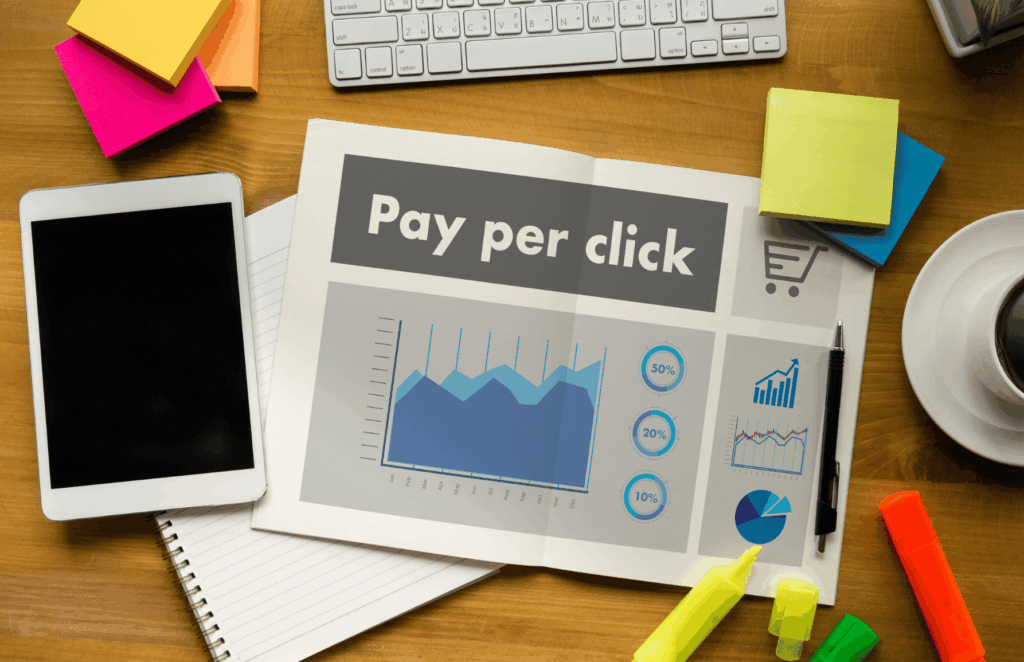
The primary metric is Cost-Per-Click (CPC). In highly competitive industries like legal services or enterprise software, a single click can cost upwards of $50. In less competitive niches, a click might cost just a few cents.
You retain complete budget control. You can set daily or monthly spending limits so you never spend more than you are comfortable with. Small businesses can often see meaningful results with a budget of just a few hundred dollars a month, provided the campaign is highly targeted.
Tips for a Successful PPC Campaign
To get the most out of your advertising budget, keep these best practices in mind:
- Choose the right keywords: Focus on specific, long-tail keywords that indicate a high intent to buy.
- Write compelling ad copy: Highlight your unique selling points and include a clear call to action.
- Optimize landing pages: Ensure the page directly matches the promise made in your ad.
- Track and improve: Regularly review your campaign data. Pause underperforming ads and allocate budget to the winners.
- Avoid common mistakes: Do not send all your traffic to your homepage. Always use dedicated landing pages.
Determining Your Next Steps in Digital Advertising
PPC is a highly effective tool for businesses that need immediate visibility and have a budget to invest in marketing. It works exceptionally well for local service providers, e-commerce stores, and B2B companies looking for targeted lead generation.
Take a close look at your marketing goals, profit margins, and target audience. If you need fast, measurable results and want total control over your targeting, setting up your first PPC campaign is the logical next step.
Orbit Optimizations for Google Ads, Meta Ads, and SEO Services
Orbit Optimizations is designed to deliver maximum ROI by leveraging data-driven strategies tailored for digital advertising and search engine marketing. Here’s how they apply:
- Google Ads: With Orbit Optimizations, you can refine your campaigns through advanced keyword targeting, bid adjustments, and audience segmentation to ensure your ads reach the right people at the right time. These optimizations help reduce ad spend while increasing click-through rates and conversions.
- Meta Ads (Facebook/Instagram): Orbit Optimizations focuses on creative testing, audience retargeting, and detailed tracking to boost engagement and drive valuable actions. It enables advertisers to align their messaging with dynamic audience behaviors, improving ad relevance and campaign performance.
- SEO Services: Through Orbit Optimizations, website content can be enhanced with smart keyword research, link-building strategies, and technical SEO improvements. This ensures that your website ranks higher on search engines, attracts organic traffic, and sustains long-term visibility.
Implementing these optimizations provides a well-rounded approach to achieving impactful digital marketing results. Bundle any service for a great discount! Orbit Optimizations is one of the most affordable and results-driven digital marketing company in Canada.